A Walnut Creek condo owner named Donald DeFesi has watched his monthly association fees more than double since 2015, climbing to $1,500 a month, according to reporting picked up by the Mortgage Bankers Association's industry newsletter this past April. He now pays more each month to his HOA, insurance, and property taxes combined than he pays toward the principal and interest on his mortgage. That is not a rare complaint anymore. It is the new math for a growing share of condo owners across the state, and Walnut Creek is not exempt.
The reflex is to blame inflation, insurance premiums, or association decisions. Sometimes that is the whole story. But if you are getting ready to sell a Walnut Creek condo or townhome this year, there is a specific change to your association's paperwork to know about, and it has nothing to do with landscaping or the pool heater. For associations subject to SB 326, the balcony inspection report has moved from a boardroom compliance issue to a mandatory line item in the buyer's disclosure packet.
Understanding the SB 326 inspection requirement
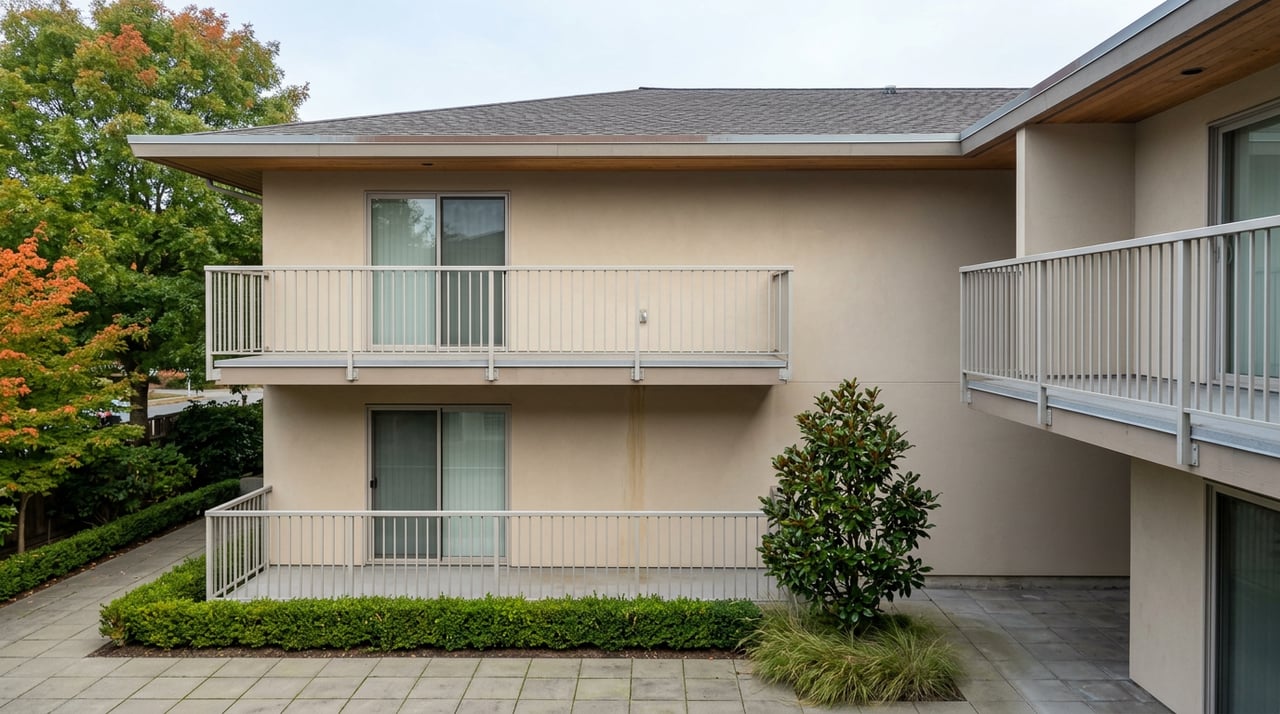
California's SB 326, codified at Civil Code section 5551, requires condominium associations with wood-supported balconies, decks, walkways, or stairways more than six feet above the ground to have those elements inspected by a licensed structural engineer or architect. The goal was straightforward safety oversight after a fatal balcony collapse in Berkeley in 2015. The first inspection deadline for existing associations was January 1, 2025, and it has already passed. Every nine years after that, the inspection repeats, timed to line up with the association's reserve study under Civil Code section 5550.
For years this was internal business. A board hired an engineer, got a report, and folded the findings into its reserve planning. A buyer touring a unit had no automatic way to see it unless they asked the right question at the right time.
What changed on January 1, 2026
SB 410 amended Civil Code section 4525, the section that governs the standard HOA disclosure packet every California condo seller must provide, to require that an association's most recent SB 326 inspection report be included in the packet when the association is subject to SB 326. For an association subject to SB 326, the balcony report is no longer a document a buyer might stumble across if they know to ask their lender or their agent. It is now part of the same paperwork that spells out dues, reserve balances, and pending litigation.
For sellers whose associations are subject to SB 326, that is the real shift here. It is not that balconies are suddenly less safe or that dues are suddenly higher. It is that a document capable of changing a buyer's financing, and a lender's appetite for the deal, now arrives earlier and more automatically than it used to. A seller who has not looked at that report before listing is handing a buyer's lender the first look at it, during underwriting, at the exact moment it is hardest to fix a surprise.
Why lenders are already treating this as a checkpoint
For associations subject to SB 326, industry reporting through 2025 and into 2026 has tracked mortgage brokers adding a new line to their underwriting checklists: proof of compliance. The American Apartment Owners Association has described deals being delayed, downgraded, or denied outright when an association cannot produce a current inspection report or show that findings have been addressed in its reserve funding. Nexova AI reports that there is no state agency actively auditing HOAs for SB 326 compliance, and the statute itself does not carry a direct fine for missing the deadline. The exposure instead runs through board fiduciary duty, insurance carriers tightening terms, and lenders who will not clear a loan without documentation.
For a seller whose association is subject to SB 326, that means the practical risk was never really about the state coming after the HOA. It is about a buyer's loan getting stuck in underwriting three weeks into escrow because nobody asked the management company for the report before the listing went live.
Walnut Creek's condo stock is not one product
This matters more in some Walnut Creek buildings than others, because the underlying exposure to SB 326 tracks directly to construction type and age. Older buildings with wood-framed balconies carry more of this risk than newer concrete-and-steel construction or ground-floor units with patios under six feet, which the law does not touch at all.
| Community type | Local example | Typical monthly HOA dues | What drives the exposure |
|---|---|---|---|
| Older buildings, less amenity-heavy | The Keys | roughly $600 to $800 or more | Older wood-frame balconies and decks are the exact elements SB 326 targets |
| Mid-range condos | City Oaks, Ygnacio Terrace | roughly $450 to $600 | Mixed construction, exposure depends on the specific building |
| Larger 55+ campus | Rossmoor | roughly $570 to $948 depending on unit type | A separate financing wrinkle, discussed below, layers on top of any SB 326 exposure |
| Smaller associations | Carmel Oaks Condominium Homeowners Association | varies by association | Same statutory reserve study cycle under Civil Code section 5550 applies regardless of size |
The dollar ranges above are not the point. The point is that a buyer comparing two Walnut Creek condos at similar prices could be comparing two completely different compliance pictures, and until January 1, 2026, there was no guarantee either one would surface that difference before an offer was written.
The Rossmoor exception, and why it is worth mentioning
Rossmoor's financing challenges are not primarily an SB 326 story. Many Rossmoor units carry a non-warrantable designation for conventional Fannie Mae or Freddie Mac financing because the community's master insurance policy fell below the coverage thresholds those agencies require, a consequence tied to California wildfire insurance pressures rather than balcony inspections. Buyers there typically need portfolio loans, co-op share loans, or other alternatives to standard conforming financing.
The reason to mention it here is not to conflate the two issues. It is to make the broader point plainly: Walnut Creek's attached-home market carries several distinct financing risk pockets, each tied to a different mechanism, and a seller who assumes "condo dues are just condo dues" is missing the specific reason a deal in one building might close smoothly while a similar deal two miles away hits a wall.
What this means if you are listing a condo this year
Before you set a price or schedule photos, it is worth doing four things:
- Ask your HOA board or management company for the association's most recent SB 326 inspection report, if the building has wood-supported balconies, decks, or walkways over six feet.
- Confirm whether that report's findings have been incorporated into the association's current reserve study, and whether any flagged repairs are funded or still pending.
- If the report identified high-priority issues, find out the timeline for addressing them before a buyer's lender asks the same question mid-escrow.
- Build the disclosure timeline into your listing plan. If the association is subject to SB 326, this report is part of the standard Civil Code section 4525 packet and will reach the buyer. Reviewing it before you list means you set the narrative instead of reacting to it.
The SB 326 inspection and report requirements do not apply to detached, townhome-style condos where you individually own the structure, since SB 410 clarified that they fall outside the law's scope. The inspection requirement also does not apply to ground-floor patios under six feet.
What this means if you are buying
If you are financing a Walnut Creek condo purchase and the association is subject to SB 326, ask early whether the association has completed its SB 326 inspection and whether the findings are reflected in the reserve study, before you consider waiving a loan contingency in a competitive offer. If the building is out of compliance or sitting on unaddressed high-priority findings, that is information worth having before your earnest money is at risk, not after. Cash buyers are not subject to a lender's underwriting checklist, but reserve health still matters for what you might face in future assessments.
Frequently asked questions
Does this apply to my townhome? Only if it is legally structured as a condominium where the association owns or maintains the exterior structure. Detached, townhome-style condos where you own your own structure are excluded under the SB 410 clarification.
What if the inspection found problems? It does not automatically kill a sale. It does mean the buyer's lender will want to see that the findings are documented, budgeted, or already addressed, so the sooner you and the HOA can show a plan, the smoother escrow tends to go.
Does this affect Rossmoor? Rossmoor's headline financing issue is the community's insurance-driven non-warrantable status, a separate matter from SB 326. Individual Rossmoor buildings with qualifying exterior elevated elements are still subject to the balcony inspection requirement on its own timeline.
What if I'm paying cash? If the association is subject to SB 326, the Civil Code section 4525 disclosure packet still includes the report, which you should read.
If you are weighing a sale in a Walnut Creek condo or townhome and want to know what your specific HOA's disclosure packet is going to look like before a buyer's lender finds out first, Lopez Listings can help you get ahead of it. Get a Free Home Valuation and we will walk through the association's paperwork with you before you ever put a sign in the ground.
This article is general information, not legal, tax or financial advice. Consult a qualified professional about your situation.